A chimney is one of the few parts of a house that takes the full force of a Michigan winter on every side at once. Wind hits it from four directions, snow piles on the crown, water soaks into the brick, and then the whole thing freezes and thaws dozens of times before spring. That is why so many Sterling Heights homeowners first notice a chimney problem as something else: a water stain on the ceiling next to the fireplace, flakes of brick in the flower bed, a musty smell in the family room, or a fireplace that suddenly pushes smoke into the house.
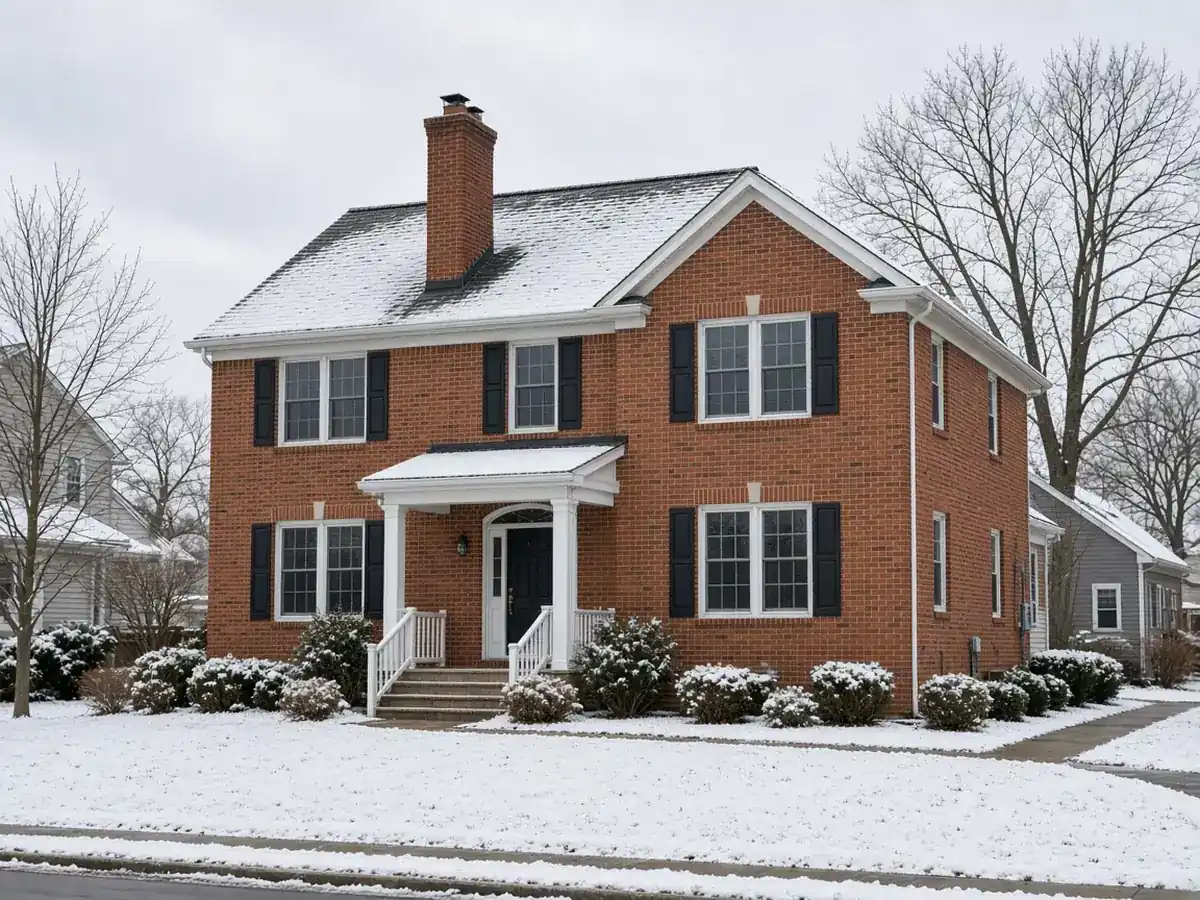
Sterling Heights Chimney Repair helps homeowners in Sterling Heights and the surrounding Macomb County communities get chimney problems diagnosed and fixed by local chimney professionals. Tell us what you are seeing, and we will connect you with a pro who can inspect it, explain what is actually wrong, and give you a written quote before any work starts. Use the form on this page or call the number at the top of the screen.
Chimney Services for Sterling Heights Homes
Every chimney is a system. The brick and mortar, the crown on top, the cap, the flashing where it meets the roof, the flue liner inside, the smoke chamber and damper, and the firebox all depend on one another. A failure in one part almost always shows up as damage somewhere else. These are the services homeowners in Sterling Heights ask about most often. Each link goes to a detailed guide that explains the warning signs, how the repair is done, and what affects the price.
- Chimney repair: diagnosing and fixing the most common chimney problems, from loose brick to leaks to draft issues.
- Chimney rebuilding: partial or full rebuilds when the masonry above the roofline has failed.
- Tuckpointing and masonry repair: replacing eroded mortar joints and spalled brick before water gets in.
- Chimney crown repair: sealing, resurfacing or replacing the cracked concrete cap on top of the chimney.
- Chimney cap and chase cover installation: keeping rain, snow, birds, raccoons and squirrels out of the flue.
- Chimney flashing and leak repair: stopping water where the chimney meets the shingles.
- Chimney liner installation: stainless steel and cast-in-place liners for wood, gas and furnace flues.
- Chimney inspection: Level 1, 2 and 3 inspections, including inspections for home sales.
- Chimney cleaning and sweeping: removing creosote, soot and blockages so the fireplace is safe to use.
- Fireplace repair: fireboxes, dampers, smoke chambers, doors and gas log issues.
- Chimney waterproofing: breathable water repellents that keep brick from soaking up moisture.
- Chimney removal: taking down unused chimneys for roofing, solar or remodeling projects.
Why Chimneys Fail So Often in Southeast Michigan
Brick and mortar are porous. They absorb water from rain, melting snow and even humid air. When that water freezes, it expands, and the expansion pushes tiny cracks a little wider each time. In a place like Sterling Heights, where winter temperatures bounce above and below freezing over and over between November and April, those cycles add up quickly. A small hairline crack in a crown in the fall can become an open path for water by the end of the season.
Once water is inside the masonry, the damage speeds up. The faces of bricks can pop off, a problem called spalling. Mortar joints soften and wash out. Water reaches the steel damper and rusts it shut, soaks the wood framing around the chimney, and stains the drywall and ceiling inside. Inside the flue, moisture combines with combustion byproducts to attack clay tile liners and mortar joints. None of this happens overnight, which is good news: when it is caught early, most chimney damage can be repaired instead of rebuilt.
Many Sterling Heights homes were built between the 1960s and the 1980s, which means a lot of chimneys in the city are now forty to sixty years old. Original crowns from that era were often just a mortar wash troweled over the top bricks rather than a properly formed concrete crown with an overhang. Original clay flue liners may have cracked from a chimney fire decades ago without anyone knowing. Furnace and water heater flues that were sized for older, less efficient equipment may no longer be the right size for a modern appliance. A good inspection looks for all of these things.
Signs Your Chimney Needs Attention
You do not need to climb on the roof to spot most chimney problems. Walk around the house and look up with a pair of binoculars, then check inside around the fireplace. Call for an inspection if you notice any of the following:
- Water stains, peeling paint or bubbling drywall on the ceiling or walls near the chimney.
- Brick pieces, sand-like mortar or concrete chunks on the roof, in the gutters or on the ground below the chimney.
- White, chalky staining on the brick, called efflorescence, which means water is moving through the masonry.
- A chimney that leans, even slightly, or a gap opening up between the chimney and the house.
- Rust on the damper, firebox or fireplace doors, or a damper that no longer opens and closes smoothly.
- A strong campfire or musty odor from the fireplace, especially on humid summer days.
- Smoke that rolls back into the room instead of going up the flue.
- Pieces of clay tile or flakes of shiny, tar-like creosote falling into the firebox.
- Animal noises, nesting material or birds inside the chimney.
- A missing or rusted chimney cap, or a cracked concrete crown visible from the street.
What to Expect When You Request a Quote
When you contact us, we ask a few simple questions: what you are seeing, how old the house is, whether you burn wood, gas or nothing at all, and whether the chimney also vents a furnace or water heater. We pass that information to a local chimney professional who serves Sterling Heights so they can reach out and schedule a visit.
At the visit, the technician should inspect the chimney from the roof, the attic if accessible, and the fireplace or appliance connection, and then explain what they found. Ask for photos. A trustworthy chimney pro will show you the cracked crown, the open mortar joint or the failed flashing instead of asking you to take their word for it. You should get a written quote that separates what needs to be done now for safety or to stop water, from what can wait.
There is never an obligation to hire anyone. If you want a second opinion on a large repair such as a rebuild or a new liner, getting one is reasonable, and a good contractor will not pressure you out of it.
How Much Does Chimney Repair Cost in Sterling Heights?
Prices vary a lot depending on the height of the chimney, how steep the roof is, how much brick needs to be replaced, and whether the work is outside, inside the flue, or both. The ranges below are rough national and regional ballparks meant to help you plan. They are not quotes, and the only reliable price is a written estimate after an inspection.
- Chimney sweeping and a Level 1 inspection: commonly a few hundred dollars.
- Chimney cap installation: often a few hundred dollars for a standard single-flue cap, more for custom multi-flue caps.
- Crown sealing or minor crown repair: often several hundred dollars; full crown replacement typically costs more.
- Flashing repair or replacement: commonly several hundred to a couple thousand dollars depending on the roof.
- Tuckpointing: priced by the area of masonry; small sections are a few hundred dollars, a full chimney can be more.
- Stainless steel liner installation: frequently in the low-to-mid thousands, depending on flue size and length.
- Partial rebuild above the roofline: often several thousand dollars; full rebuilds cost more.
The most expensive chimney repairs are almost always the ones that were put off. Replacing a crown is far cheaper than rebuilding the top half of a chimney after years of water damage.
Gas, Wood and Furnace Chimneys
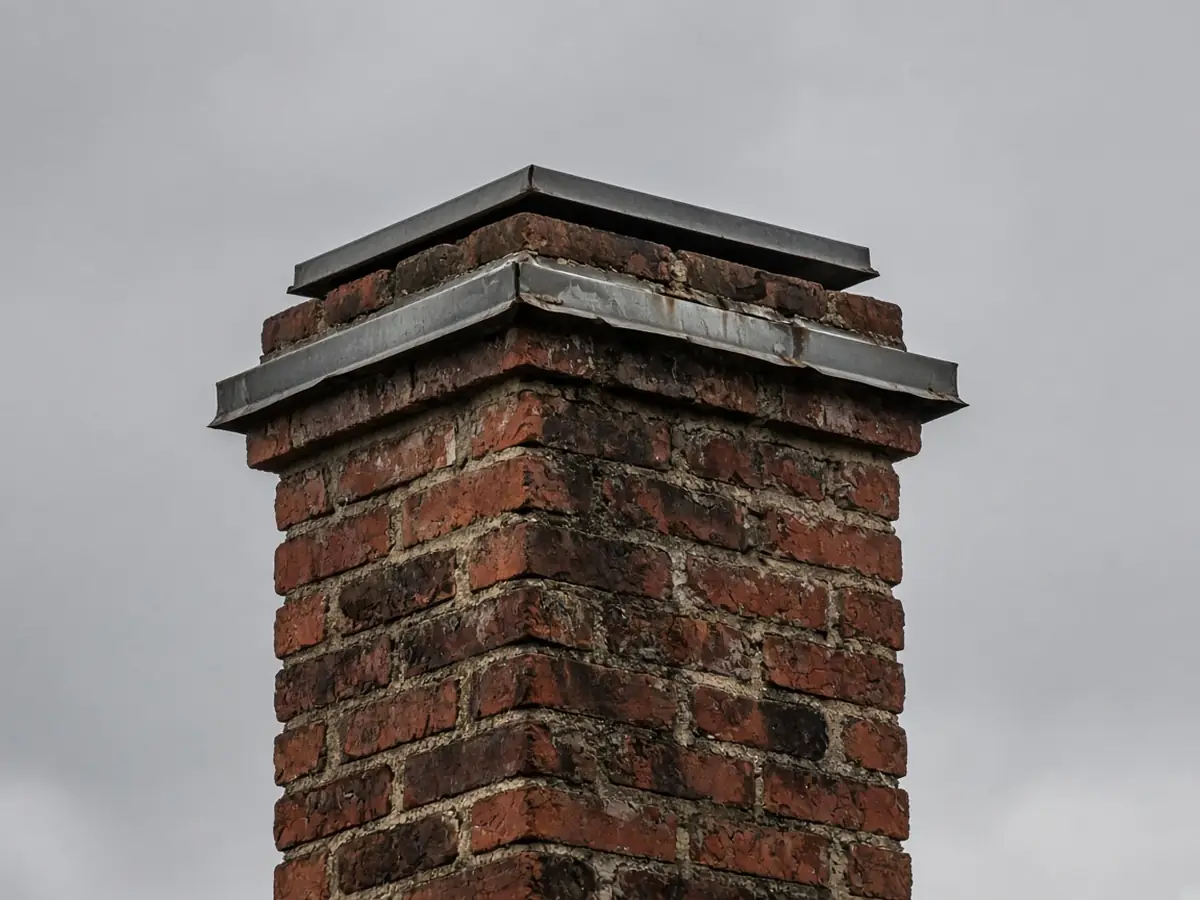
Not every chimney in Sterling Heights has a wood-burning fireplace at the bottom. Many homes have a masonry chimney that vents a gas furnace and water heater, sometimes alongside a fireplace flue. Gas appliances do not create creosote, but their exhaust carries a lot of water vapor. In an oversized or unlined masonry flue, that vapor can condense, mix with combustion acids and slowly eat away at the mortar and tile from the inside. Signs include crumbling mortar near the cleanout, white staining on the outside of the chimney, and debris at the base of the flue.
If you replaced your furnace with a high-efficiency model that vents out the side of the house through plastic pipe, the old chimney may now only serve the water heater. That change can leave the remaining flue too large for the water heater alone, which can cause poor draft and condensation. A chimney professional can tell you whether the flue needs a properly sized liner.
Wood-burning fireplaces have their own concerns. Burning wood produces creosote, a flammable residue that builds up inside the flue. How fast it builds depends on how dry the wood is, how hot the fires burn and how well the chimney drafts. Regular sweeping and an annual inspection are the best way to prevent a chimney fire.
Why Homeowners Should Act Before Winter
The best time to schedule chimney work in Southeast Michigan is late spring through early fall. Masonry and crown work need temperatures above freezing for mortar and concrete to cure properly, and schedules fill up fast once the first cold snap hits and everyone lights a fire at the same time. If you notice a problem in winter, it is still worth calling. A technician can often make a temporary repair, install a cap, or tell you whether the fireplace is safe to use until permanent repairs can be done in warmer weather.
Choosing a Chimney Professional
Whoever works on your chimney, a few questions will help you pick well:
- Are you insured for roof and masonry work, and can you show proof?
- Do you or your technicians hold a chimney certification such as CSIA or NFI?
- Will you give me photos of the problem and a written, itemized quote?
- Do you pull permits when they are required, such as for a new liner or a rebuild?
- What warranty do you offer on the work, and what does it cover?
Be cautious with anyone who knocks on your door unannounced, insists that a chimney must be rebuilt immediately without showing evidence, or asks for full payment before starting.
Service Area
We help homeowners throughout Sterling Heights, including ZIP codes 48310, 48311, 48312, 48313 and 48314, from the neighborhoods near 14 Mile Road up to Hall Road (M-59), along the Van Dyke, Mound, Ryan, Dequindre and Schoenherr corridors, and around Dodge Park and the Clinton River. We also help homeowners in nearby Troy, Warren, Utica, Shelby Township, Clinton Township, Macomb Township, Fraser and Madison Heights. See the full service areas page for details.
Get a Free Chimney Repair Quote
If your chimney is leaking, crumbling, smoking or simply overdue for an inspection, fill out the quote form or call. Describe what you see, add any details about the house, and a local chimney professional will follow up to set a time. Answers to common questions are on our chimney FAQ page.